
Three Scientists Awarded Nobel Prize for Brain Cell Activity Research
The Nobel Prize in medicine was awarded to three scientists for their research into the mechanisms the brain uses to switch the activity of individual nerve cells on or off.
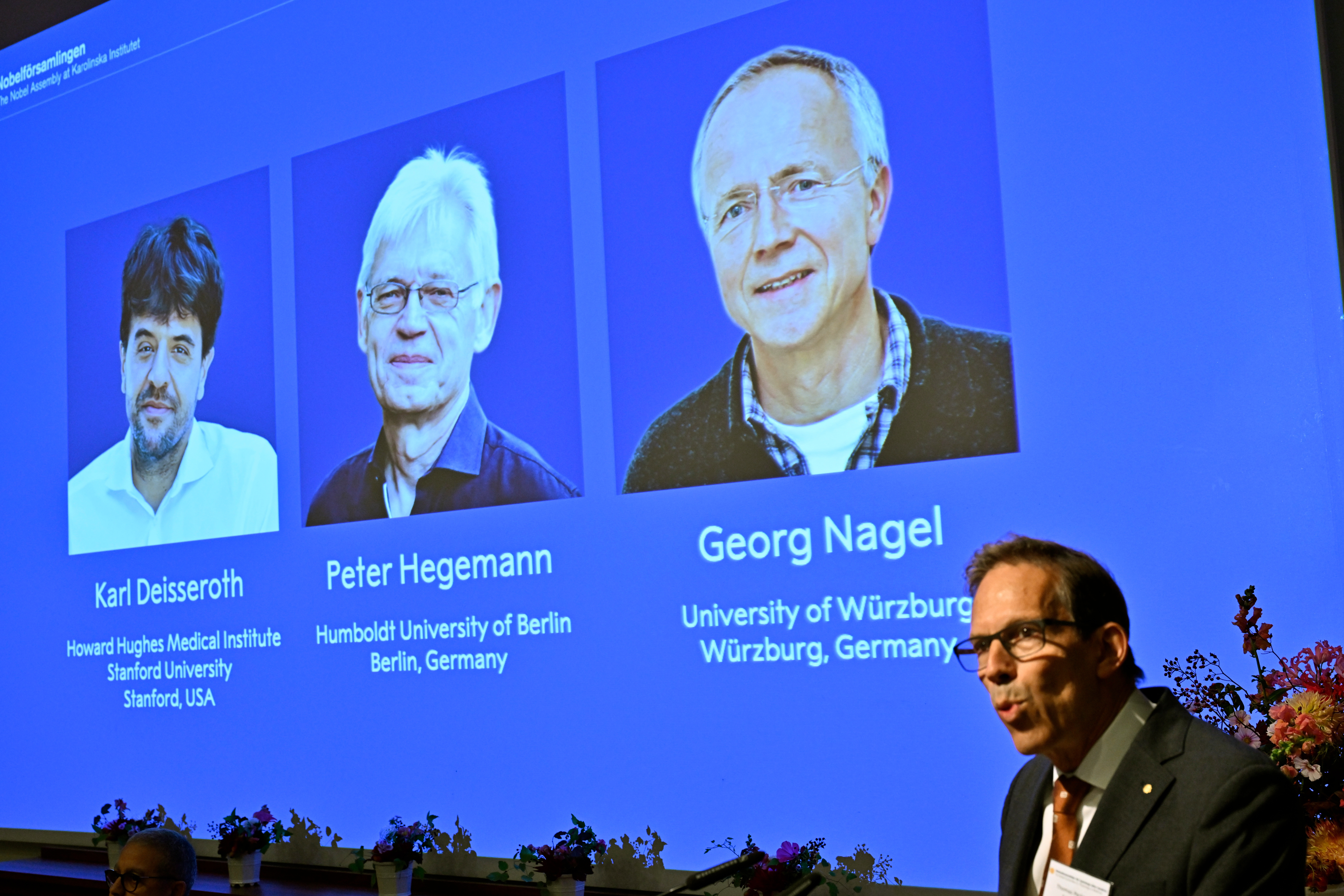
 Baltimore, MD, October 5, 2026 — The Nobel Prize in Physiology or Medicine has been awarded to three scientists for groundbreaking discoveries concerning the mechanisms that control the activity of individual nerve cells within the brain. This research sheds light on how the brain precisely switches neurons on and off, a fundamental process for neurological function.
The scientists’ work has elucidated critical pathways and molecular players involved in regulating neural signaling. Understanding these intricate mechanisms is vital for comprehending a vast array of brain functions, from sensory perception and motor control to cognition and memory formation. Disruptions in these finely tuned processes are implicated in numerous neurological disorders, making this research highly significant for future medical advancements.
The specific details regarding the names of the awarded scientists, their affiliated institutions, or the precise timeline of their discoveries were not provided in the summary. Further information is needed to identify the laureates and the full scope of their contributions. However, the core of their award-winning research focuses on the fundamental biological processes that govern how nerve cells communicate by modulating their electrical and chemical activity.
The ability of the brain to selectively activate or silence specific neurons is essential for processing information and responding to stimuli. This research contributes to the foundational knowledge of neuroscience, potentially paving the way for new therapeutic strategies targeting conditions such as epilepsy, Parkinson’s disease, and Alzheimer’s disease, where neuronal activity is known to be dysregulated.
The Nobel Committee’s decision highlights the importance of fundamental biological research in advancing our understanding of complex biological systems. While the summary does not include specific methodologies or experimental results, the recognition underscores the profound impact this work is expected to have on the field of neuroscience and medicine.
Story summarized from the original created by The Associated Press on www.npr.org, see more information here.
Media gallery
