XRDNA Completes Phase I of Project OPAL, First Mission Field Test of Mission Fabric™
SALT LAKE CITY, Oct. 6, 2026
Press Release Disclaimer: This is a press release distributed through the XPR Media network. It has not been independently verified by our newsroom.
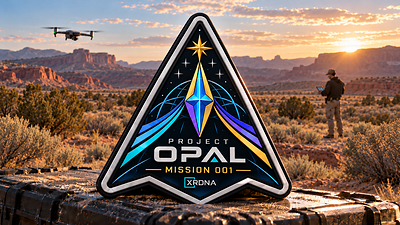

XRDNA Completes Phase I of Project OPAL, First Mission Field Test of Mission Fabric™
PR Newswire
SALT LAKE CITY, Oct. 6, 2026
Operational Prototyping for Advanced Logistics initiative moves XRDNA’s persistent identity, sensor fusion, and AI-assisted mission infrastructure into the field
SALT LAKE CITY, Oct. 6, 2026 /PRNewswire/ — XRDNA Inc., developer of persistent identity and mission-context infrastructure for complex physical and digital systems, announced the successful completion of Phase I of Project OPAL — Operational Prototyping for Advanced Logistics — the company’s ongoing field prototyping initiative for Mission Fabric™ and related technologies.
Phase I of Project OPAL moved XRDNA’s technology beyond laboratory and software demonstrations into a live field environment alongside participating mission partners.
The internally funded development tested XRDNA’s ability to create and maintain a common digital representation of an actual mission across people, places, things, sensors, and operational activities.
During the field test, XRDNA created and operated a live mission and manifest within Mission Fabric, connecting personnel, field locations, mobile assets, sensor nodes, drones, and simulated downrange payloads through persistent eVa™ (Elastic Vector Addressing) identities.
Rather than treating sensor feeds and mission systems as isolated sources of information, Mission Fabric maintained the relationships between those elements as the mission evolved.
MoE™ (Map of Everything) provided the AI-assisted interaction layer, allowing operators to work with the mission context created by Mission Fabric and the underlying eVa identities. Sensor observations and field inputs could be associated with the people, places, and things they represented, creating a continuously evolving mission picture rather than a collection of disconnected data feeds.
The field environment also provided XRDNA an opportunity to evaluate the system under practical operational constraints, including mobile devices, distributed sensors, changing asset relationships, communications limitations, and field-driven mission workflows.
“Phase I of Project OPAL was an important transition for XRDNA because we weren’t demonstrating Mission Fabric against a scripted software environment—we were using it to represent an actual mission unfolding around us,” said Charles Adelman, CEO and Co-Founder of XRDNA. “People moved. Assets moved. Sensors generated observations. Communications changed. Mission relationships evolved. The underlying identity of those elements had to remain persistent throughout all of it. That is exactly the problem Mission Fabric was designed to solve.”
Project OPAL is intended to continue as an iterative operational prototyping effort, with future phases expanding the complexity of mission scenarios, participating systems, sensor integrations, communications environments, and operational mission workflows evaluated in the field.
Phase I also provided XRDNA with field observations and warfighter feedback that will inform continued development of Mission Fabric, MoE, eVa, Field View, sensor integration, and XRDNA’s broader mission infrastructure.
The field test represents the necessary validation milestones for XRDNA and its vision of providing an identity, resolution, and trust infrastructure capable of connecting heterogeneous systems across terrestrial, airborne, space, and simulated environments.
About XRDNA
XRDNA builds persistent identity, trust, and mission-context infrastructure for complex systems. Its core technologies—eVa™ (Elastic Vector Addressing), SoI™ (Spheres of Influence), Mission Fabric™, and MoE™ (Map of Everything)—work together to connect people, places, things, systems, sensors, and autonomous platforms across physical, digital, autonomous, and simulated environments.
By maintaining identity, relationships, authority, and context as missions evolve, XRDNA enables continuity across heterogeneous systems and operational domains.
Mission context without boundaries.
 View original content to download multimedia:https://www.prnewswire.com/news-releases/xrdna-completes-phase-i-of-project-opal-first-mission-field-test-of-mission-fabric-302898183.html
SOURCE XRDNA Inc